On A Roll

Need a massage but don’t want to spend the money?  It might be time to invest in a foam roller.  Known in the fitness world as “the poor man’s massage”, foam rollers have been gaining popularity with athletes and non-athletes alike.   They come in various sizes and densities, but no matter what type you use the general premise remains the same : find an area of tension (or knot), roll it out, repeat.  Since foam rolling breaks up the scar tissue on the outer lining of the muscle it is actually a form of stretching.  The beauty of foam rolling is that you can do it before a workout, after a workout, or while you are at home watching television.  There is no wrong time to foam roll.  When foam rolling with clients I generally concentrate on the lower extremities since that is where it usually does the most good.  Hamstrings are always key, as are the calves and quads.  One of the areas where a foam roll does the most good is the IT band (warning: this is a sensitive area for most and usually a bit painful, but in an it-hurts-so-good type of way).  That said, you never want to roll to the point of bruising.  If you find that happening, back off a bit or switch to a lower-density roller.


Trend Setting

January is typically a time of renewal, righteousness, and resolutions, many involving health.  While some people focus on the health of their bank account the majority of people in the US resolve to have healthier bodies.  Snacks of cookies become snacks of carrot sticks.  Evenings of caroling with family and friends are replaced with evenings of spinning with random strangers at the gym.  January is also known as the most depressing month of the year.  Coincidence?  I think not. You cannot expect to magically transform into a completely different human being as soon as the year changes and not end up completely disappointed.  If you didn’t like spin class last year what makes you think you will like it this year?  Getting healthier does not mean shunning everything that feels good for a lot of things that don’t.  Getting healthier should make you feel better about yourself and life, not worse.

If  you are having a hard time finding the workout that is right for you rest assured there is no lack of choice for the modern-day fitness enthusiast (or want-to-be enthusiast).  Every December the American College of Sports Medicine releases its top 20 fitness trends for the coming year.  You can access the full article complete with research statistics  here or the watered down but quicker to read version here.    Educate yourself on all that is out there and see what speaks to you.  Try one, ten, or all twenty options until you find a few you enjoy (or at least can tolerate for the greater good).  Fitness is a young and ever evolving industry that is constantly creating new and different ways to get people up and moving.  With a little research you can alleviate a lot of boredom and discomfort and ultimately find your path to a better you.  Release some endorphins to ensure a happy new year even after the champagne buzz subsides.

Young, Slim, and Diabetic

Trying to stay slim by restricting calories alone ?  This may keep you from packing on the pounds in the short-term but new research shows that what you eat and how much you exercise and the main factors in type 2 diabetes prevention.  In a recent study type 2 diabetes, a disease previously associated with the overweight or obese, can creep up even when the scale doesn’t.  Although it tends to be more prevalent in the overweight population, about 15 percent of people with type 2 diabetes fall into the healthy weight category.  With 65 million people age 20 and older developing pre-diabetes age is no longer a deciding factor either.  Young adults at a healthy weight can still be at risk.   This phenomenon known as TOFI (thin outside, fat inside) occurs when fat that would normally appear under your skin builds up around abdominal organs instead.   This fat causes inflammatory substances to affect your organs, namely the liver and pancreas.  Insulin sensitivity decreases and risk for type 2 increases.

Because exercise causes muscles to use glucose at 20 times the normal rate it makes sense that most of those at risk have tried to maintain their weight through diet alone.  For people with an “all calories are created equal” mentality, it may seem acceptable to eliminate exercise as part of the equation and concentrate mainly on calorie restriction.  While this might work to keep weight stable, it may lead to other problems later on.  Since exercise is the only way to shed visceral fat (the kind that builds up around the organs) it remains essential for diabetes prevention.  A well-balanced diet low in sugar is also key to preventing type 2 from occurring.

So if you thought last years twinkie diet  was too good to be true you are now vindicated.  In the case of preventing type 2 diabetes it’s truly what’s inside that counts.

Workout Interrupted

Injury, illness, and erratic schedules are three common catalysts of a fitness routine down shift.  You are on a role, losing weight, getting stronger, and feeling great when life throws you a curve ball leaving you sidelined and discouraged.  With flu season rearing its ugly head and the holidays fast approaching it is highly likely that most of us will experience some challenges to maintaining our health and fitness levels in the coming months.  Don’t throw your routine (or treadmill) out the window just yet.  Check out these tips to keep yourself on track:

1.) Enjoy a fresh start – Rather than beating yourself up for taking time off, use the opportunity of getting back to exercise as a fresh start.  Use this time to reassess your fitness routine.  Stepping away from our day-to-day routine allows us to see the bigger picture and usually results in a paradigm shift.  If you are not excited about getting back it is usually a sign that it is no longer working for you.  Change it up and create a new routine, chances are you’ll see more results than you did with the old stale one.

2.) Hone in on diet – When you are unable to exercise as much as you’d like, shift your focus to diet.  Take this time to finally get a handle on portion size or start that food journal you’ve been meaning to write.  Try some new healthy recipes to nourish your body, speed healing, and increase immunity.

3.) Redefine your definition of exercise – When you can’t exercise like you usually do you are forced to think out of the box.  Traveling and unable to get to the gym?  Try doing bodyweight exercises in your hotel room or taking the stairs instead of the elevator to your floor.  Coming off an illness?  Build back up to your previous fitness level by taking the dog for longer walks or doing push ups and lunges  between household chores.  Recovering from an injury?  Utilize the muscle groups you are allowed to use and expand your repertoire.  You will come off your injury with a broader knowledge of workouts and strength in muscle groups you may have been neglecting, especially helpful if the injury resulted from overuse.

Remember fitness is more than the 30-60 minutes you spend at the gym.  Use a break in routine as a chance to realize that though working out is important, every day choices are the largest component to lifelong fitness.

Chest Press for the Soul

It’s hard to believe it has been over a decade since Tae Bo came into popular culture.  If you have ever owned a Tae Bo tape (or for those of you who are younger, DVD) you might remember Billy Blanks in all his lycra-clad glory asking you to “call upon a higher power” to keep yourself going during the last few grueling exercises of the hour-long workout.  I remember that striking me as a young fitness enthusiast.  It had never occurred to me that spirituality and fitness had anything to do with each other.  Quite the contrary, I assumed they were polar opposites.  Growing up Catholic I did do a great deal of standing, kneeling, and sitting during mass but can’t say I ever considered it a “workout”.  With vanity being one of the seven deadly sins I somehow automatically assumed it wrong to dream about flatter abs and leaner thighs.  However, I’ve recently come across a growing body of evidence that faith and fitness are becoming more intertwined.  Beachbody (the same company that owns the extremely popular P90X)  has recently backed a series of Body Gospel workouts, well-known self-help author Geneen Roth’s book “Women, Food, and God” has remained popular since it’s release in the spring of last year, and some churches have even opened fitness centers or started hosting workout classes for their congregation.

We often hear about mind-body connection but it might be even more helpful to think in terms of spirit-body connection.  We tend to look to a higher power for strength in life circumstance, but what if we looked to that higher power for help in lifting that 15lb dumb bell?  No matter what your faith, anyone who has been through a heart pounding, muscle burning workout can tell you it takes more than willpower to reach the finish line.  Praying  for weight loss (or for the workout to be over) is missing the point.  The saying “God helps those who help themselves” applies directly to this situation.  So, if you are listlessly logging mind numbing hours on the treadmill and think this fitness revolution might be for you read more about it here.  “My body is my temple” just got a whole new meaning.

Challenge to Your Balance

You balance your tires, balance your checkbook, and try to eat a balanced diet.  We all spend a great deal of time trying to find or maintain a sense of balance in our lives, but how about in our bodies?  Balance is a key component in any fitness routine.  From competitive sports to day to day activities, balance is key to all movement.  Adding balance training to your fitness routine can reduce your risk of injury, especially those that occur in the ankle or knee (and you thought those single leg biceps curls and Bosu step ups were just your trainer’s idea of a sick joke).  A huge side benefit to balance training is the increased calorie expenditure.  Because more muscles are recruited through balance training it has great potential for aiding in weight loss.  Check out the exercises listed below for ideas on how to incorporate balance into your routine:

Single Leg Balance: Though it seems simple, standing on a single leg is harder than it seems.  Try it.  Still unconvinced?  Try standing on a single leg while performing some routine exercises such as biceps curl or lateral raises.

Single Leg Hip Rotation: This is another great exercise to recruit those stabilizing muscles.  Want an extra challenge?  Try taking your gaze in the direction of the traveling knee.

Single Leg Step Up to Balance: Ready to move with your balance?  Try a step up to balance using a bench, box, or even a stair if at home.  Want more of a challenge?  Add a free weight overhead press to the top of the motion.

Aside from the exercises mentioned above, you can stand on one foot while brushing your teeth, doing the dishes, or waiting in line at the grocery store.  Try it a few times this week and see what you think.  Wouldn’t it feel good to be more balanced?

Comfortably Numb

Have you ever felt like a big change in your body happened overnight?  One day you were a high school football player or track star and seemingly the next you are sitting in a cubicle sluggish and overweight?  In an age of incredible technology where information moves at the speed of light and life does too it’s easy to get swept up in the current without paying much attention to the small things, like the state of your body.  I am a big fan of listening to music when I run,  am not opposed to treadmills with built-in TVs, and think those stationary bike/ video game combinations are pretty cool.  However, in any fitness regimen I do think it’s important to occasionally rid yourself of distractions and focus on your movement.  You may have heard the phrase “inhabiting your body”.  At first it sounds kind of silly (what other choice do we have, aren’t we kind of forced to do that?)  But think about it….how often do you really take inventory of every physical sensation?  How often do you notice the feel of the ground (or treadmill) beneath your feet or the way your muscles work in synergy on the elliptical?  The gym might not be the first place you think of to get connected and stop and smell the flowers (or dirty gym socks), but getting in the habit of really feeling your body can improve your workouts ten fold.  Here are some alternative ideas to help you start tuning in to your body:
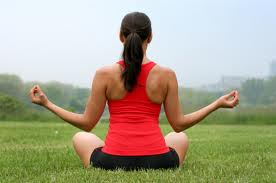
1.) Yoga: I’ve mentioned yoga a few times in past posts, but this is an easy and fairly accessible way to start connecting to your body.  Find a class in your area, a DVD, or even free online videos to start becoming more mindful of your physical and emotional state.

2.) Laban Movement Analysis/Bartenieff Fundamentals: These classes might be a bit harder to find, but are usually available in college towns (they are typical in many college level dance/theater programs) or through some local dance studios.  They break down human movement into concepts, principles, and exercises to facilitate proper function and awareness.  You can learn more about Laban Movement Analysis here and Bartenieff  Fundamentals here.

3.) Alexander Technique: Alexander Technique is becoming more widely available in dance and fitness facilities or you could seek out a private teacher in your area.  Alexander Technique focuses on re-learning proper movement patterns and letting go of bad habits in our everyday activities.  Its primary function is to relieve unnecessary tension to allow an individual to move with more freedom and ease.  You can learn more about it here.

4.) Nia: Part martial arts, part dance, Nia is a movement class that focuses on healing and improving the body and spirit through fitness.  It has become more popular in recent years at local health clubs but is also available in dance and fitness studios.  You can learn more about it here.

5.) Egoscue: Egoscue was created as a way to relieve pain through proper body alignment.  With only 24 clinics in the US it may be a bit harder to find but you can search their website for practitioners in your area.  You can learn more about it here.

6.) Pilates: With a huge growth in popularity in recent years, Pilates has become a household name.  Though class levels and styles vary, Pilates focuses on strengthening the body through improved core strength.  It is widely available at gyms, studios, through private instruction, and on DVD and internet websites.

Find a technique that works for you and try it at least once a week.  If nothing here speaks to you, take a solo walk sans your Ipod or other distractions.  Be proactive in checking in with your body from time to time and you may save yourself pain, time, and money later on.  So go ahead, inhabit your body!


Change Your Mind, Change Your Body part 2

Most days you are able to keep a positive outlook.  You try to be kind to yourself  and look on the bright side in order to improve your health.  But what about those days you can’t find that inner cheerleader?  What about the days when your boss is a jerk, the kids are misbehaving, and your spouse is working late yet again?  In my last post I gave some tips to help change your perception and spur physical change.  Though I am a big believer in staying positive and its great impact on overall health I realize no one approaches their workout raring to go and happy as a clam every time.  That said, here are some tips for exercising on those days when frustration, anxiety, or life in general gets the best of you:

-Kick the sh*t out of something- Instead of going out and wreaking havoc (or kicking the sh*t out of someone) head to your nearest kick boxing class or make use of that punching bag at the local gym.  It’s an amazing release for your emotions and great for your body too.  Not able to get to the  gym?  You can always rekindle that old romance with Tae Bo or substitute a pillow for a punching bag.

-Crank some tunes, crank out some reps- Yoga is the form of exercise most associated with stress relief but sometimes it’s hard to channel your Zen.  Try playing  some angry music on your iPod and hitting the weights instead.  Use that adrenaline rush to your advantage and see if you can increase your usual load.  You’ll feel stronger both physically and mentally afterwards.

-Bust out some intervals- Pick whatever form of cardio you most enjoy (angry music optional) and try some interval training.  Push as hard as you can for one minute, go back to a moderate pace for two minutes, repeat.  Try this for 30 minutes or so and see how much better you feel afterwards.  At the very least that burning in your quads (or hamstrings, or glutes) will take your mind off of whatever was bothering you for a while.

-Throw yourself at the mercy of the instructor- Pop into a new class (or try a new video if at home).  Learning something new will take your mind off of your problems for a bit while simultaneously boosting your confidence.  Interacting with other people in the class can help bring you out of a funk and taking cues from an instructor is less stressful and more motivating than trying to figure out a workout on your own.


Change Your Mind, Change Your Body

“The curious paradox is that when I accept myself just as I am, then I can change”- Carl Rogers 

I was reminded of this quote by a question I received this week (thank you for asking, your questions are always appreciated!) about how to get motivated when you are stuck in a rut.  In many of my posts I write about motivation, about how the small steps we take lead to the big changes we want to see and feel.  But what happens when you want to start the journey but you feel your feet are stuck in cement?  Putting stipulations on yourself is natural, thinking “I’ll be happy when…” is a common problem in fitness and in life.  When you are feeling down about yourself and your fitness level it’s hard to get motivated to change.  When a client shows up for their first session they usually look at that as their first step, but I know it is actually their second.  The first step towards health and fitness happens internally.  It is the moment when you decide that you are worth the time and effort needed to improve your quality of life.  It’s the moment when you let go of who you were and who you want to become and look at who you are presently.  In order to spur the process of change you need come to terms with where you are now and work from there.  Start with some simple day to day exercises:

-Practice gratitude: Sure, your life isn’t perfect but focusing on the negative will only keep you from moving forward.  Focusing on the things that are right in your life no matter how small can give you the energy to improve upon what is not right.  Listing a few things every day (the car started, you made it to work on time) can assist in changing your perception.

-Be kind to yourself: Maybe you didn’t work out every single day this week but that doesn’t mean you are a complete failure.  Celebrate the things you do that impact your health in a positive way, no matter how insignificant they may seem.  Congratulate yourself for choosing an apple instead of a brownie for your afternoon snack or taking the stairs instead of the elevator at work.  We all enjoy being recognized for what we do right, why not give yourself some much needed recognition?

-Look at eating healthy and exercising as self-nourishment, not self torture: The desire to eat right and exercise comes from a very positive place, so don’t ruin it by placing unrealistic and unhealthy expectations on yourself.  Resigning yourself to a life of eating only rice cakes and spending 5 hours a day on the treadmill is not the way to go.  Instead of restricting yourself, treat yourself to a new fruit or vegetable you’ve never tried or take up a new activity that you’ve always been curious about.  Don’t question your initial instincts, find what inspires you and go for it.  It doesn’t have to be what inspires everyone else, so long as it gets you moving in the right direction.

-Get some support: You don’t have to go it alone.  Getting support from others, whether it be in a group class or online will help you reach your goals faster.  Being held accountable for your actions gives you a sense of purpose and achievement.  Reach out to others through online weight loss websites, joining a local exercise group, or even posting your goals and achievements on Facebook.  This will add some external motivation to your internal motivation.

As always, questions are suggestions are always welcomed.  Have you tried any of these steps?  Do you have some others you might recommend?  Feel free to post below or click on the  “Get Your Fitness Questions Answered for Free” tab to join the conversation!

Hard Core

Chances are if you haven’t been living under a rock for the past decade you are familiar with the fitness buzzword “core”.  You know you have one and you know it needs to be stronger but you don’t know how to accomplish this.  In order to be inspired to get that large inflated (or if you are like most people deflated) exercise ball out of your closet you might need some motivation.  Take a second as you are reading this and check your posture…does it resemble the seventh gentleman to the right in the picture above?  Did you straighten up as you read that last sentence?  If so then congratulations, your core is now engaged.  Unfortunately you may need to do a bit more than sit up straight at the computer to really activate and improve your core muscles.  The following are some exercises you can perform, no equipment necessary:

1.) Prone Iso-Ab (aka Plank)

2.) Side Iso-Ab (aka Side Plank)

3.) Quadruped Arm Opposite Leg Raise

Hold each plank for a minute and do 12 reps of the leg raise on each side.  Perform 2-3 sets of each exercise.

Now that you are feeling motivated, go rescue that exercise ball from the closet.  Resist the urge to sell it on ebay and use it for a seat instead.  Repeat daily.